Switchboard upgrade costs vary depending on your home, circuits, safety switches, EV charger plans and board condition. Learn what affects the price.
As a general guide, a residential switchboard upgrade in NSW can often sit somewhere between $1,500 and $4,000, depending on the size of the home, the number of circuits, the condition of the existing board, whether safety switches or RCBOs are required, and whether the switchboard needs to support future upgrades like an EV charger, solar or battery storage.
Some straightforward switchboard upgrades may sit toward the lower end. Larger homes, older boards, three-phase systems, damaged wiring, asbestos backing boards, switchboard relocation or major capacity upgrades can push the cost higher.
The short answer is: you usually need an electrician to inspect the board before giving an accurate price.
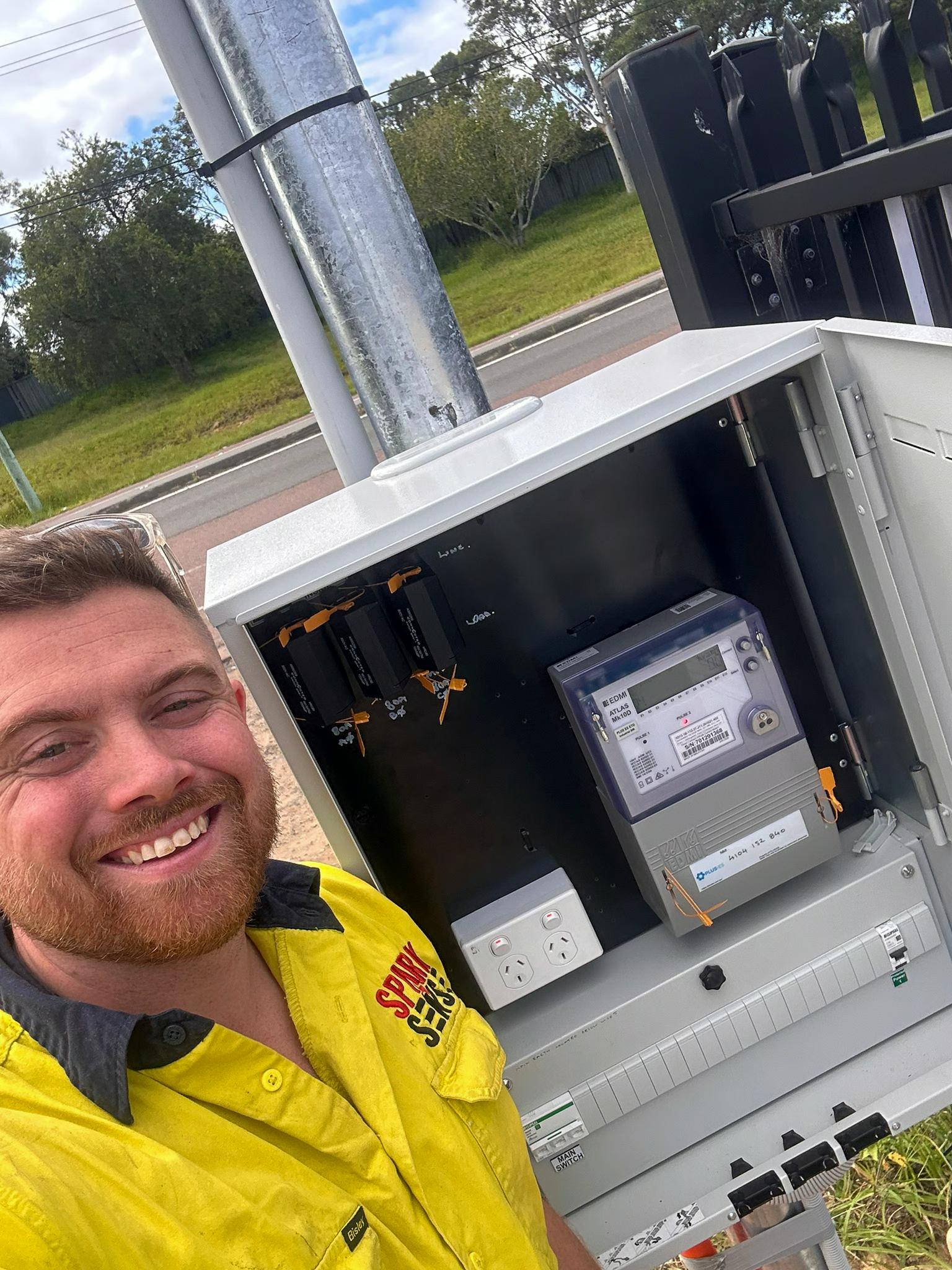
At SparkSense Electrical, we help homeowners across the Central Coast and Newcastle understand whether their switchboard needs a simple upgrade, a more detailed replacement, or preparation for future electrical loads like EV charging, solar, batteries, air conditioning or pool equipment.
A switchboard upgrade is not a one-size-fits-all job.
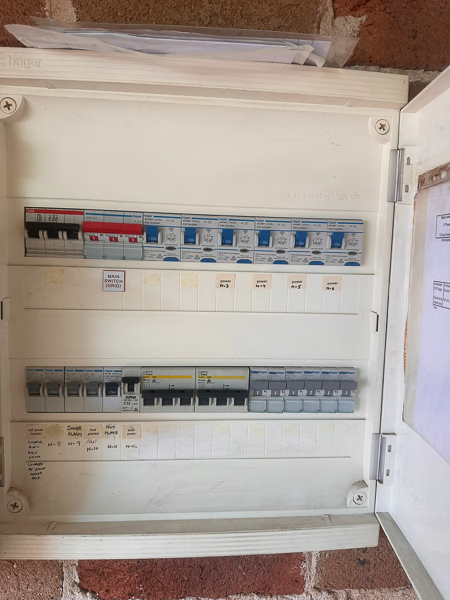
Two homes can look similar from the street but have completely different electrical systems behind the switchboard cover. One home may have a clean modern board with only a few changes needed. Another may have ceramic fuses, limited space, old wiring, poor labelling, missing safety protection and no room for an EV charger.
That is why switchboard upgrade pricing depends on the actual condition of the board and what the home needs.
The biggest cost factors usually include:
In plain English: the price depends on whether your board needs a tidy-up, a serious upgrade, or a full “this thing has seen some decades” rescue mission.
A proper switchboard upgrade is more than swapping a few parts.
Depending on the property, a switchboard upgrade may include:
The goal is to make the switchboard safer, cleaner, easier to understand and better suited to the way modern homes use power.
If your switchboard still has ceramic fuses, the upgrade may be more involved than a simple component replacement.
Ceramic fuse boards are common in older homes, but they were not designed for today’s electrical demand. Modern homes often run split-system air conditioning, EV chargers, pool equipment, home offices, induction cooking, solar systems, batteries, security systems and more.
A ceramic fuse board may need to be replaced with modern protection devices and a cleaner board layout.
You should have your switchboard checked if it still has:
If it looks like your switchboard has been quietly minding its own business since 1987, it is probably time for a licensed electrician to inspect it.
The more circuits your home has, the more protection devices and board space may be required.
A small unit or compact home may have fewer circuits. A larger home may have separate circuits for lighting, power points, kitchen appliances, oven, cooktop, air conditioning, pool equipment, hot water, outdoor areas, EV charging and more.
More circuits can mean:
This is one of the main reasons switchboard upgrade costs can vary from home to home.
Modern switchboards usually need suitable safety protection across the home’s circuits.
A safety switch is designed to cut power quickly when it detects electrical leakage. RCBOs combine overload protection and residual current protection in one device, giving each circuit individual protection.
Using RCBOs can make a switchboard cleaner and can help reduce the inconvenience of one fault taking out multiple circuits.
For many homes, upgrading the switchboard means moving away from older protection and installing modern safety-focused devices.
This is not the glamorous part of a renovation. Nobody walks into a house and says, “Wow, what beautiful RCBO protection.” But when something goes wrong, it matters.
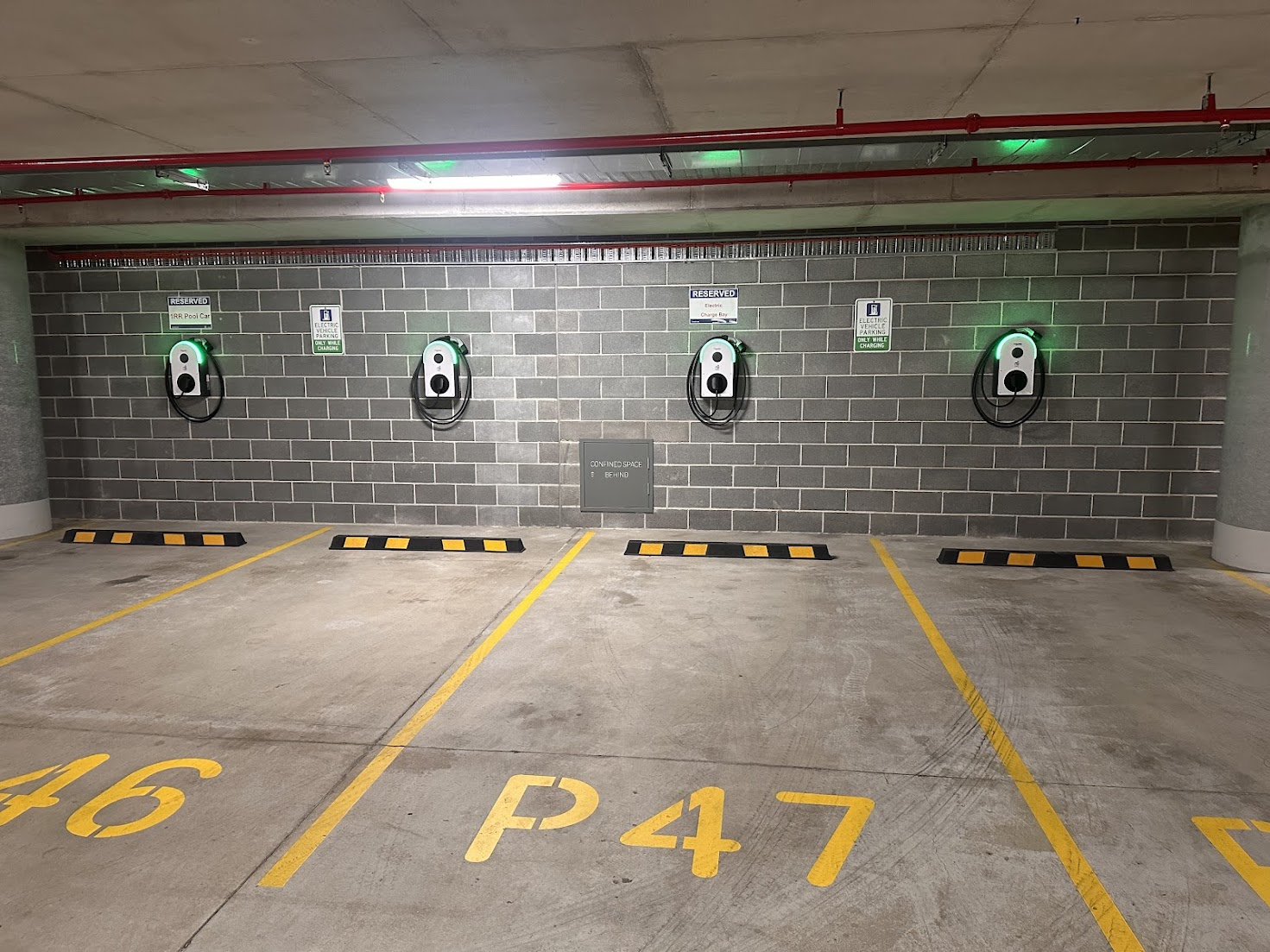
Planning to install an EV charger? Your switchboard may need to be upgraded first.
An EV charger adds a significant new electrical load to the home. Before installation, a licensed electrician should check whether the switchboard has enough capacity, suitable protection, available space and a safe path for a dedicated EV charging circuit.
A switchboard upgrade may be needed before an EV charger if:
If the board is already modern and suitable, an upgrade may not be required. But it should be checked before the charger goes in.
Solar and battery systems can also affect switchboard upgrade requirements.
Many homes are now being upgraded in stages:
First solar.
Then an EV charger.
Then a battery.
Then maybe more air conditioning, pool equipment or a future renovation.
All of these upgrades rely on the switchboard.
If you are planning future energy upgrades, it can be smarter to think ahead instead of only solving today’s problem. A well-planned switchboard upgrade can help prepare the home for future circuits, smarter load management and cleaner integration with solar, battery storage or EV charging.
Request a callback or quote. Fast response guaranteed.
Reach us for quotes, emergencies, or advice. Licensed and insured. Serving Central Coast & Newcastle.